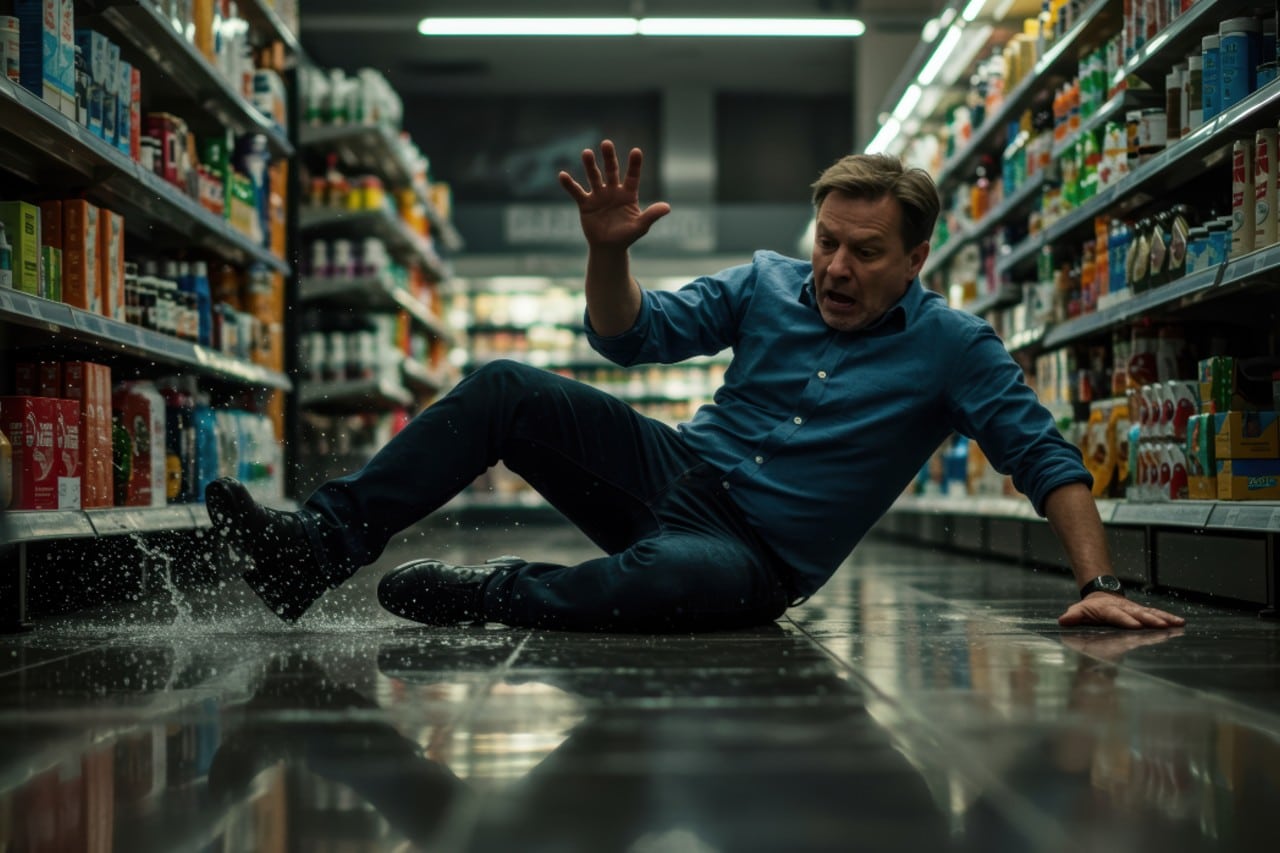
Picture a wet November evening outside a big-box store on Pacific Highway South. The parking lot lights are out. The pavement is slick from an afternoon rain. You step off the curb, your foot catches a crack in the asphalt, and you go down hard. You did nothing wrong. You were a customer, in a place you had every right to be, and the property was not maintained the way it should have been.
That distinction matters, and it matters legally. In Washington State, property owners have a legal duty to keep their premises reasonably safe for the people they invite onto them. When they fail, and someone gets hurt, that failure has consequences. Federal Way’s specific retail environment, its geography, its weather, its aging commercial corridors, shapes how these cases develop and what it takes to win them.
If you were hurt at a Federal Way retail location, here is what you need to understand before you talk to anyone from an insurance company.
In this post, you’ll learn:
- How Washington law defines a property owner’s duty to retail shoppers
- Why Federal Way’s retail corridors create elevated injury risk
- What types of evidence protect your claim and why time is working against you
- Why represented victims consistently recover more than those who go it alone
What Washington Law Says About Property Owner Responsibility
Washington premises liability law holds property owners accountable for injuries caused by unsafe conditions they knew about, or should have known about, and failed to fix. The law organizes visitors into three categories: invitees, licensees, and trespassers. Retail shoppers are invitees, the category that carries the highest duty of care. When you walk into a store, a mall, or a commercial parking lot as a customer, the owner owes you a reasonable inspection of the property, prompt correction of known hazards, and adequate warning when a hazard cannot be fixed immediately.
Washington also follows a pure comparative negligence standard. That means even if an insurance adjuster argues you were partially at fault, your recovery is reduced by your percentage of fault, not eliminated. If a jury finds you 20 percent responsible, you still recover 80 percent of your damages. Do not let an adjuster use partial fault as a reason to walk away from your claim.
One hard deadline governs every Federal Way premises liability case: under RCW 4.16.080, you have three years from the date of injury to file a personal injury lawsuit in Washington. Miss that window and your right to recover is gone, regardless of how strong your case is.
Why Federal Way’s Retail Environment Creates Real Risk
Federal Way is one of the most retail-dense cities in King County. The corridors along Pacific Highway South and SR 99 are lined with big-box stores, strip malls, fast-food chains, and regional shopping centers, including the Commons at Federal Way, one of the largest enclosed malls in the South Sound. That concentration of commercial activity means high foot traffic, constant loading and unloading, and properties that see heavy use every single day.
Many of the strip malls and commercial lots along these corridors were built decades ago. Aging pavement, outdated lighting systems, and deferred maintenance are common. Add Western Washington’s fall and winter weather, months of rain, frost, and standing water, and the conditions for a serious slip-and-fall or trip-and-fall injury are present on a near-daily basis. Property owners who do not keep pace with inspections and repairs are not just cutting corners. They are creating legal exposure every time a customer walks through their lot.
Common Injury Scenarios in Federal Way Retail Areas
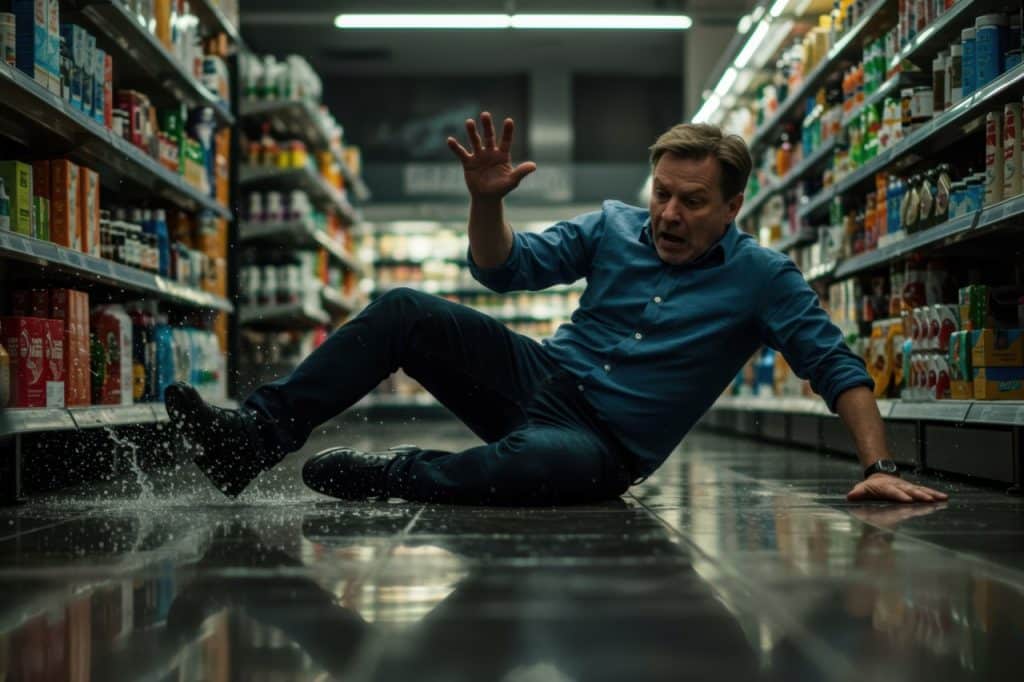
These are the fact patterns we see most often in Federal Way premises liability cases.
Wet-floor slip-and-falls at store entrances. During rainy season, water tracks in constantly. A store that does not place mats, post warnings, or assign staff to monitor the entrance is inviting a fall.
Cracked and uneven pavement in strip mall parking lots. Older lots along SR 99 and Pacific Highway South often have heaved asphalt, broken curbs, and unmarked drop-offs. A crack that has been there for two years is not a surprise hazard. It is a neglected one.
Inadequate lighting in shared parking structures and rear lots. Poor lighting is both a fall hazard and a security risk. Rear lots behind anchor stores are frequently underlit and undermonitored.
Negligent security at high-traffic locations. When a retail location has a documented history of criminal incidents and takes no steps to protect customers, that failure can support a negligent security claim.
Falling merchandise and display hazards. Overstocked shelves, improperly secured displays, and items stored at height without adequate restraint injure customers in Federal Way stores every year.
Liability Is Often Shared, and That Complexity Works Against You
Federal Way retail injuries rarely involve just one responsible party. A shared parking lot might be owned by one entity, managed by another, and maintained under contract by a third. A strip mall tenant controls the interior of their space, but the landlord may control the exterior walkways and lot. A contractor doing overnight pavement work may have left a hazard unmarked.
When multiple parties share responsibility, each one’s insurer will point at the others. Identifying every liable party, and preserving your claim against all of them, is one of the most important things an attorney does in a Federal Way premises liability case. Missing even one can reduce what you recover.
Evidence Disappears Fast. Act Before It Does.
The evidence that wins a Federal Way premises liability case starts disappearing the moment your injury happens. Retail surveillance footage is typically overwritten on short cycles; the exact retention window varies by location, but waiting weeks to act is a serious risk. Incident reports get filed and forgotten. Witnesses move on. Hazards get repaired before anyone photographs them.
Protect your claim from day one. File an incident report at the store before you leave. Photograph the hazard, the scene, and your injuries. Get the names and contact information of anyone who witnessed the fall. Seek medical attention immediately and keep every record. Maintenance logs and inspection records can be obtained through the legal process, but only if your attorney moves quickly enough to request them before they are purged.
Why Represented Victims Recover More
The insurance adjusters working for retail property owners and their management companies are not neutral. Their job is to minimize what they pay. They are experienced, they move fast, and they know that an unrepresented injury victim is easier to settle with for less.
Represented victims consistently recover higher settlements than those who handle claims on their own. At Roberts Jones Law, we are trial-ready, which means the insurance companies on the other side know we will take a case to court if the offer does not reflect what our client actually deserves. That posture changes the negotiation. We handle everything from medical bill coordination to evidence gathering to litigation, so you can focus on recovering while we handle the fight.
You Have Rights. Let’s Talk About Your Case.
If you are dealing with medical bills, missed work, and the uncertainty of not knowing what your injury is worth, you do not have to figure this out alone. Roberts Jones Law offers a free consultation to review your Federal Way premises liability case and explain your options in plain terms. There are no fees unless we win. Contact us today to get started.