You merge onto I-5 in Federal Way as a massive semi-truck looms in your rearview mirror. The sheer scale of an 18-wheeler makes your sedan feel fragile and small. One sudden lane change by that driver can change your life in a fraction of a second. For too many, it already has.
A fully loaded commercial vehicle can weigh up to 80,000 pounds. This mass makes collisions with passenger vehicles extremely violent. Federal data shows that 70% of fatalities in large truck crashes occur to occupants of other vehicles.
Understanding local collision causes helps truck accident victims stay alert during their daily commute through King County. Awareness of driver habits and road risks provides a layer of defense.
This guide explains how to identify negligence and the legal process to take after an impact. Here is what you will learn:
- Identify local high-risk corridors
- Understand driver negligence factors
- Learn evidence preservation steps
- Review available fair compensation types
High-Risk Traffic Corridors in Federal Way

Federal Way sits between the Port of Tacoma and Seattle, creating a high-density freight environment.
This constant flow of heavy cargo increases the risk for local commuters sharing the road. Congested interchanges often lead to dangerous injury accidents involving passenger cars and tractor-trailers.
The Impact of I-5 and SR 99 Freight Traffic
The I-5 and SR 99 corridors carry massive commercial loads through the city every hour. Heavy congestion at the S 320th Street exit causes sudden stops that trucks cannot always meet. These highway segments see frequent rear-end collisions due to the long braking distances required for trailers.
A truck driver often transitions from high-speed highways to narrow city streets, like Pacific Highway South. These shifts require extreme precision and constant attention to smaller vehicles in tight lanes. Failure to adjust speed during these transitions results in devastating side-swipe accidents.
Construction Zones and Infrastructure Challenges
Road improvements throughout Federal Way create narrowed lanes and shifting traffic patterns for everyone. Large trucks struggle to navigate these restricted spaces when lane markers are temporary or unclear. Merging areas near these zones are prime locations for serious truck-on-car impacts.
Local infrastructure often forces heavy trucks to make wide turns at busy intersections. Drivers in smaller cars may not realize a truck needs multiple lanes to clear a corner. These limitations contribute to serious accidents in which passenger vehicles are trapped against curbs or concrete barriers.
Common Causes of Trucking Accidents
Identifying the causes of Federal Way truck collisions requires examining both driver conduct and equipment condition. Many serious crashes involve violations of Federal Motor Carrier Safety Administration safety standards designed to protect the public.
Driver Fatigue and Mechanical Failures
The Federal Motor Carrier Safety Administration reports that brake problems and driver fatigue rank among the leading factors in commercial truck crashes. When hours-of-service rules are ignored or maintenance is delayed, the risk of a serious collision rises quickly.
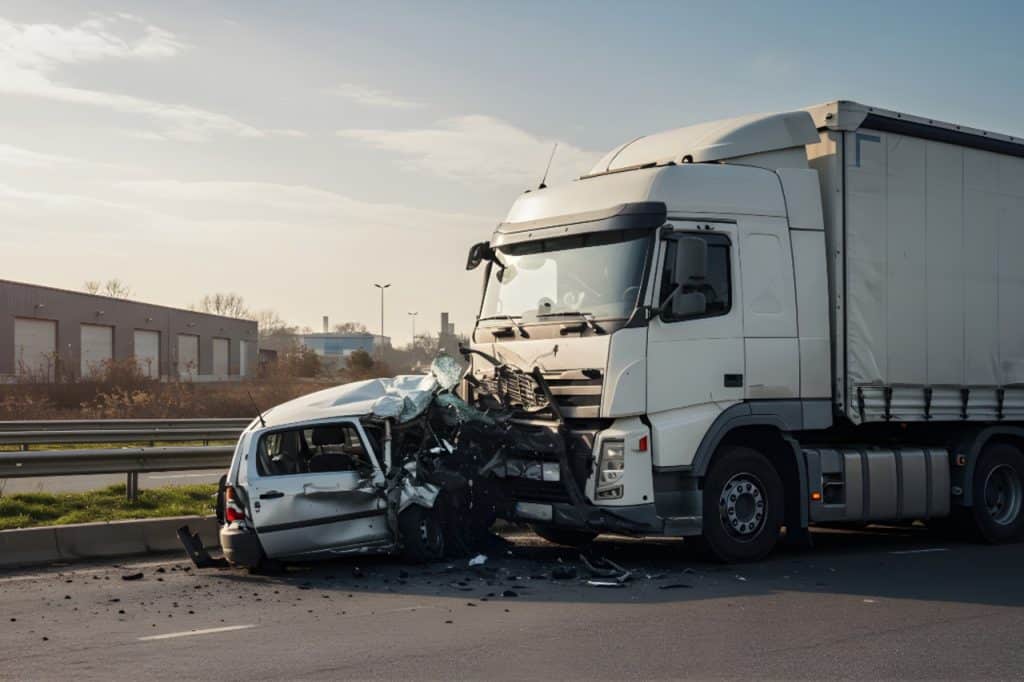
Distracted Driving
Commercial drivers rely on dispatch systems, navigation tools, and mobile devices. When attention shifts from the roadway, even briefly, the size and weight of a tractor-trailer magnify the consequences of a mistake.
Speeding and Delivery Pressure
Tight delivery schedules create pressure to maintain unsafe speeds. A fully loaded truck requires significantly more distance to stop than a passenger vehicle, and excess speed reduces a driver’s ability to react safely.
Blind Spots and Lane Changes
Large trucks have substantial blind spots, often called “no-zones.” Smaller vehicles can be obscured by the cab or trailer during lane changes, increasing the risk of side-impact collisions.
Improper Cargo Loading
Unbalanced or unsecured cargo can shift during transit. Sudden weight movement may cause a trailer to sway, jackknife, or roll, especially during turns or sudden braking.
Poor Maintenance and Weather Conditions
Brake failures, worn tires, and missed inspections increase the likelihood of loss of control. Rain and low visibility further reduce traction and reaction time, compounding the danger when safety protocols are not followed.
Who May Be Liable in a Trucking Accident?
Liability in a commercial truck crash often extends beyond the driver. Multiple entities oversee a single shipment, meaning truck accident cases may involve multiple liable parties. Accessing all available insurance coverage is only achieved when every negligent party is identified.
Liability Comparison in Commercial Trucking
A collision involves complex contractual relationships among drivers, owners, and contractors. This table illustrates how different parties contribute to Federal Way truck accident causes through specific failures.
| Party | Typical Negligent Action | Evidence Involved |
| Truck Driver | Traffic violations or drug use | Dashcam and police reports |
| Trucking Company | Negligent hiring or over-scheduling | Driver logs and personnel files |
| Maintenance Shop | Faulty repairs or part defects | Service records and inspections |
| Cargo Loader | Overloading or poor balancing | Weight tickets and loading logs |
Complexity in Trucking Injury Claims
A truck accident case is far more complex than standard car accident claims due to vicarious liability and respondent superior. You are often fighting a multi-billion-dollar trucking company and its investigators. These entities begin building a defense immediately to minimize their financial exposure.
A Federal Way truck accident lawyer will look for systemic safety failures. This includes reviewing the carrier’s federal safety ratings and past violation history. Proving a pattern of negligence can significantly strengthen your truck accident claim for economic damages.
How to Protect Yourself on the Road
Practice defensive habits to reduce the risk of a collision near large commercial vehicles. Drivers should assume a truck driver cannot see them unless the truck driver can see the mirrors. Proactive positioning is your best defense against negligence on busy highways.
Positioning and Blind Spot Safety
Avoid lingering in the “no-zone” areas directly behind or beside a trailer. These blind spots hide a passenger vehicle from the operator’s view. Pass trucks quickly on the left side to stay within the driver’s line of sight and avoid underride risks.
Large trucks require significant room to clear corners and stay in the lane during curves. Never squeeze between a turning truck and the curb at an intersection. Staying behind the stop line gives these vehicles the space they need to navigate safely.
Safe Merging and Following Distance
Increase your following distance to account for sudden stops or road debris. This gap provides time to react if a truck experiences a tire blowout. Avoid merging closely in front of a truck, as they cannot decelerate quickly.
Use clear signals well before changing lanes near commercial traffic. Predictable driving allows truck operators to adjust speed and maintain a safe space cushion. Consistent behavior reduces the risk of high-speed impacts during heavy-traffic transitions.
What to Do After a Trucking Accident
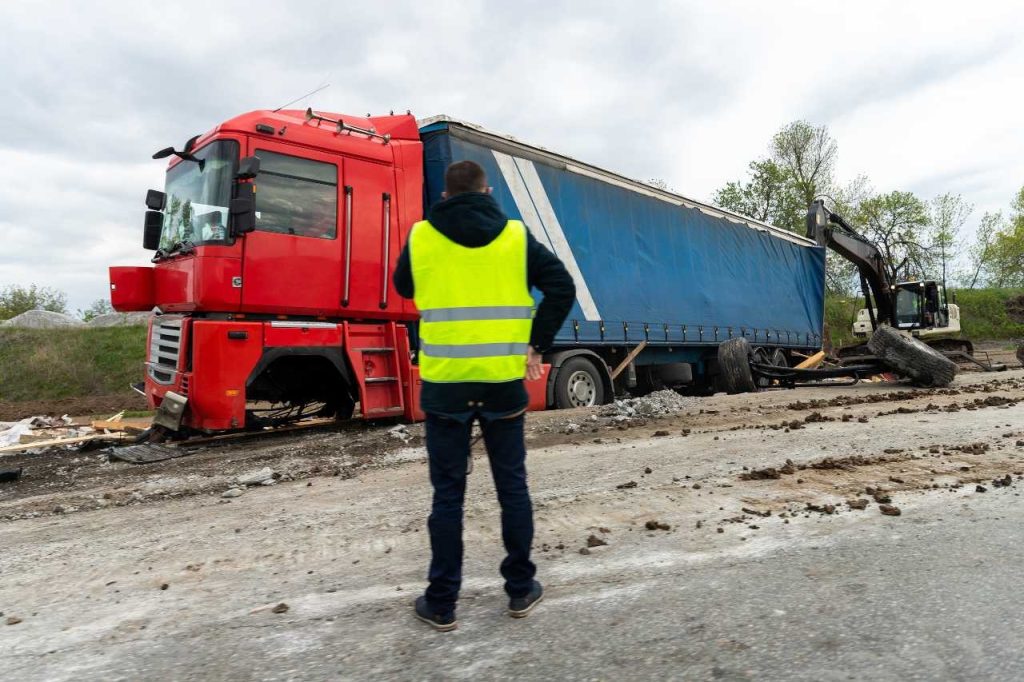
The moments following a truck crash are chaotic, but your actions during this time shape your future legal claim. What you do in the first hours affects how fault, injuries, and damages are evaluated under Washington law.
Step #1: Report the Crash
Call law enforcement and request an official report. A police report creates an independent account of the collision and may support your version of events during an insurance dispute.
Step #2: Document the Scene
If you are physically able, take photos of all vehicles from multiple angles. Capture road conditions, skid marks, traffic signals, and visible injuries before anything is moved. Visual evidence preserves details that may later be disputed.
Step #3: Obtain Driver and Witness Information
Collect the truck driver’s license details, insurance information, and DOT number. Ask witnesses for names and contact information before they leave the area. Do not discuss fault or make statements about what caused the crash.
Step #4: Contact a Truck Accident Lawyer
Speak with an experienced truck accident lawyer familiar with Federal Way cases as soon as possible. An attorney can send a spoliation letter to preserve electronic logging data and black box records. Quick action protects key evidence before it is lost or overwritten.
Step #5: Seek Medical Care
Seek medical treatment right away, even if you feel fine after the impact. Adrenaline can mask injuries such as internal bleeding or concussions. Records created on the same day connect your injuries directly to the crash.
Compensation in Trucking Accident Cases
Truck accident claims involve both immediate financial losses and the long-term impact on your life. The value of a case depends on how thoroughly damages are documented and presented.
Economic and Non-Economic Damages
Victims may pursue a personal injury lawsuit for economic damages, including medical bills, rehabilitation costs, and lost wages. You may also recover non-economic damages for physical pain and emotional distress. These damages hold negligent parties financially accountable for the harm they caused.
Long-Term Financial Impact and Future Losses
A strong injury claim accounts for lost earning capacity, long-term disability, and future medical treatment. Ongoing care, reduced work ability, and permanent lifestyle changes must be clearly documented. Careful calculation helps position you to pursue full compensation under Washington law.
Why Legal Representation Matters

Trucking companies and their insurers move fast after a crash. Their goal is to limit exposure and reduce payouts. Strong legal representation shifts that pressure away from you and places it where it belongs.
An attorney applies federal trucking regulations and Washington RCW provisions directly to the facts of your case. They examine black box data, driver logs, and maintenance records for hours-of-service violations. They also manage all insurance communication, so you do not feel pushed into a low settlement.
Key advantages of hiring a truck accident attorney include:
- Immediate investigation before the evidence disappears
- Preservation of electronic logging data and onboard recording systems
- Identification of all liable parties, including carriers and contractors
- Structured damage analysis that reflects long-term financial impact
- Protection from recorded statement traps and premature settlement offers
Legal representation brings leverage. That leverage carries directly into negotiations and trial preparation, positioning your claim for full financial recovery under Washington law.
The Right Legal Support for You
Our legal team prioritizes your health and fair compensation above all else. We understand the local corridors where these injury accidents occur and how to challenge major carriers. Our goal is to make sure you recover the compensation you deserve to move forward.
At Robert Jones Law, we offer experienced attorney advocacy to secure a successful outcome in your truck accident case. You should not have to navigate a complex, multi-party personal injury law system alone. We handle the litigation so you can focus entirely on your physical healing.If you or a loved one has been injured in a truck collision, contact Roberts Jones Law for a free consultation with a Federal Way truck accident lawyer to discuss your legal action options.